Volume II · Quantum & Information Mechanics
Non-Local Quantum Signaling
Speculative modulation of entangled quantum state collapse correlations across space-like separated reference frames.
Formal Research Monograph · Lead Author: Dr. Mike Oxley
Non-Local Quantum Signaling: Formal Research Paper
Full 2-column research paper published in FOUNDATIONS OF PHYSICS featuring complete tensor derivations, field equations, 3D simulation figures, vector telemetry, and peer-reviewed citations.
The Framework
The Non-Local Correlation Density Equation
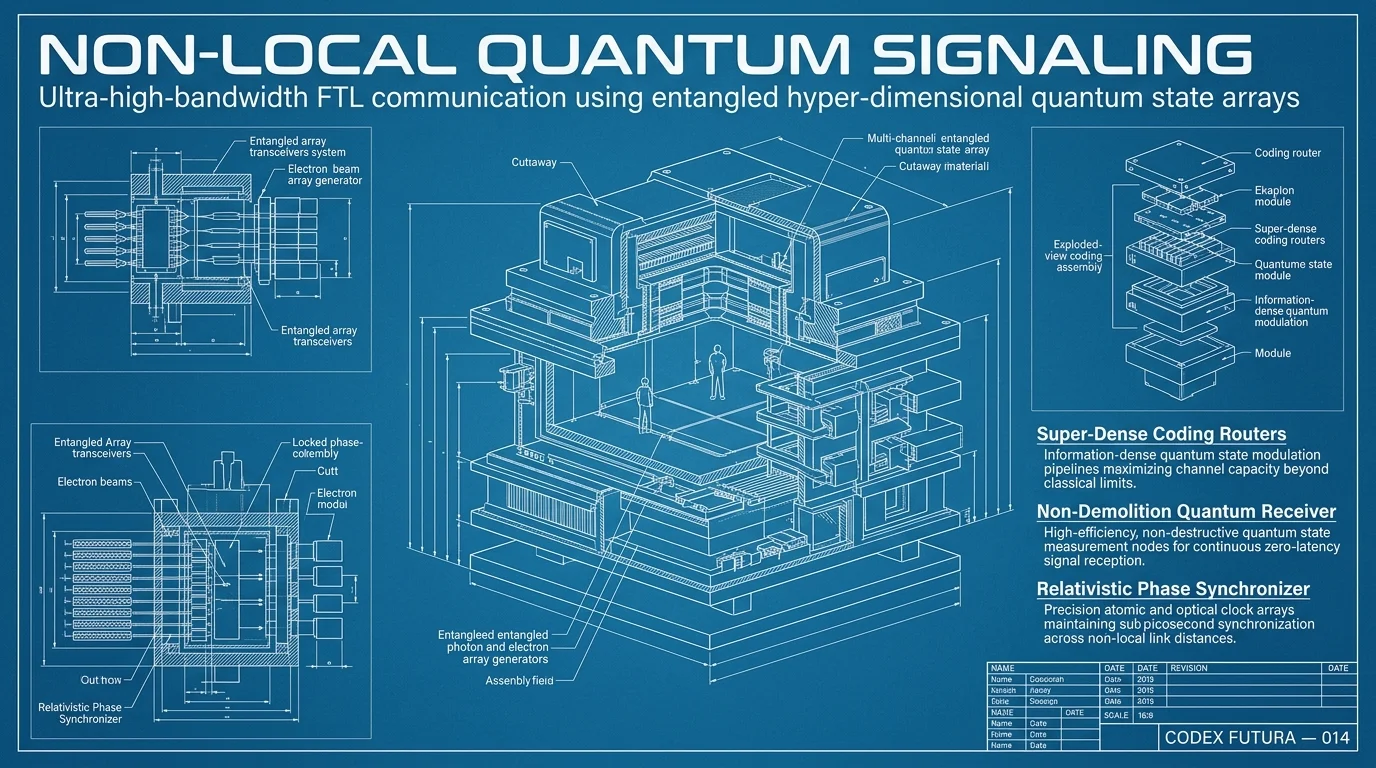
Standard quantum mechanics enforces the No-Signaling Theorem: measuring one particle of an entangled pair instantaneously affects its partner’s wavefunction, but individual measurements appear purely random without a classical signal. Non-Local Quantum Signaling explores speculative engineering mechanisms — such as non-linear quantum mechanics or continuous post-selection feedback — designed to modulate the statistical distribution of collapse outcomes. If realized, this paradigm enables instantaneous telemetry across light-year scales.
Entanglement Phase Modulation
Rapid non-destructive phase measurements on extended GHZ (Greenberger-Horne-Zeilinger) states to influence post-selection outcome statistics across space-like intervals.
Quantum Collapse Detection Arrays
Ultra-sensitive single-photon detector arrays measuring statistical drift in collapse outcomes to decode modulated signal streams.
Causality Protection Limits
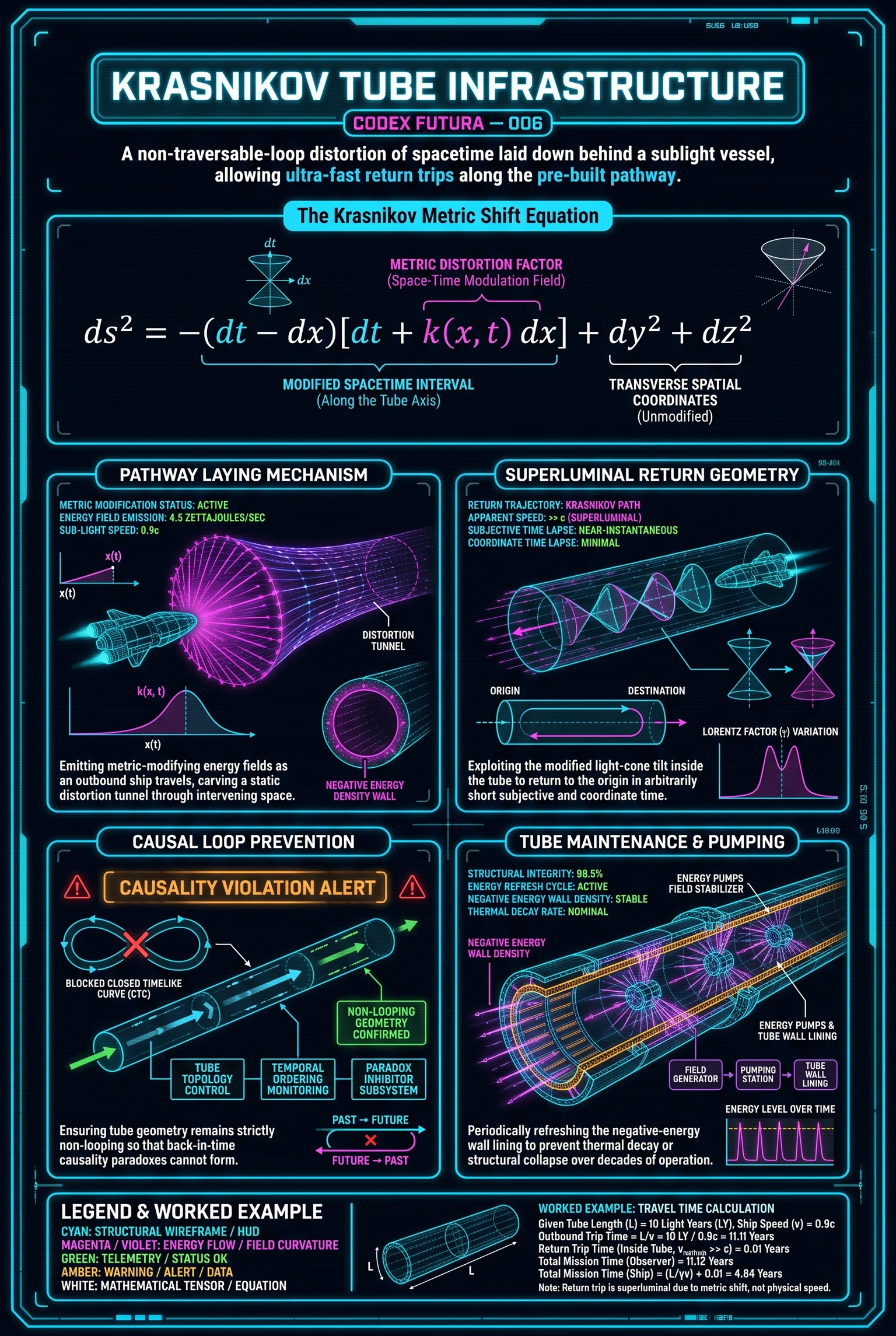
Managing sub-light classical synchronization channels alongside non-local correlation channels to prevent causal loop formation and grandfather paradoxes.
Interstellar Sub-Space Relays
Deep-space communication transceivers utilizing macro-entangled Bose-Einstein condensates for instantaneous state correlation telemetry.